
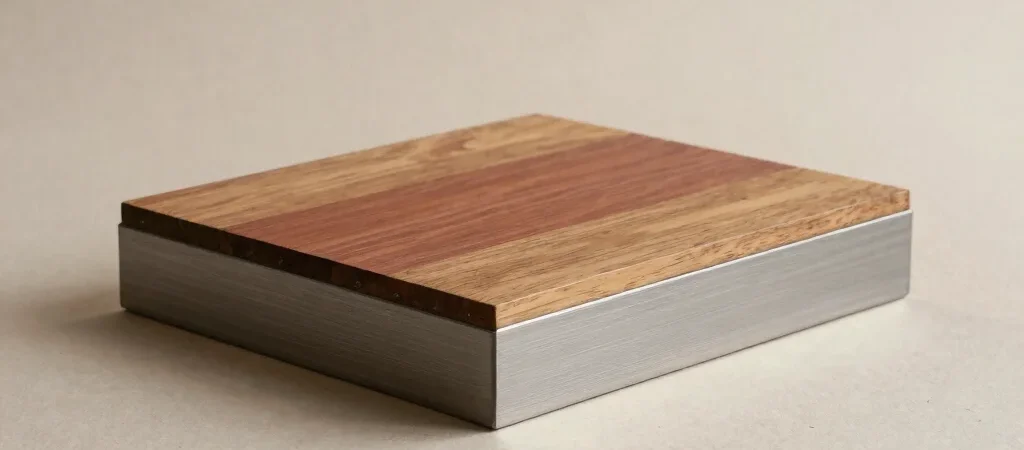
In a product photograph, finish tends to arrive first: matte, polished, brushed, soft-touch. Yet the surface is only one decision among many. Turn attention to an edge, a seam, or the underside, and the object begins to tell a fuller story about materials and making.
Read the joins
Where two materials meet, ask whether the connection is visible, concealed, or made into part of the object’s character. A clean junction might depend on a precise fit, a fastener, an adhesive, or a component designed to come apart. Without project documentation, an image cannot settle which method was used, but it can point to the questions worth asking.
Look beyond the front
A front-facing view is composed to explain the object quickly. A side view can reveal thickness and balance; an underside may show how it stands, attaches, or is serviced. These are not secondary details. They help distinguish a surface treatment from a deeper design decision.
Consider the years ahead
Materials change through use: wood takes on marks, metal develops a patina, and coatings can wear at points of contact. That change is not automatically a virtue or a defect; it depends on the intended use, care, and possibility of repair. When a project explains those choices, the object becomes easier to understand than a flawless image alone could make it.